Reviewing Information Needs for 3pl Audit Software
Choosing 3pl Audit Software calls for more than contrasting features. Services ought to initially figure out whether a system can accept, arrange, and validate the functional and billing info that forms their logistics expenses.
A valuable analysis begins with the data already generated by service providers, storage facilities, transport administration systems, venture source planning platforms, and 3PL companions. Recognizing those resources assists groups determine compatibility voids before execution.
FreightOptics offers 3pl Audit Software.
Begin With Operational Data Sources
Functional info gives the context needed to assess whether a charge matches the solution that was requested and provided. Relevant records may include shipment days, origin and location places, service degrees, plan or pallet information, weights, dimensions, tracking identifiers, distribution status, accessorial events, and warehouse activity.
Services must review just how this details is stored and exchanged. Some partners may provide organized files, while others use system integrations, sites, or standard digital files. Throughout assessment, validate whether the software application can bring these sources with each other without calling for extensive handbook prep work. It must also protect crucial identifiers so shipment, order, billing, and shipment records can be attached properly.
Check Out Billing and Agreement Information
Billing information is central to an audit due to the fact that billings contain the quantities that need to be evaluated. Essential areas can include billing numbers, billing dates, shipment referrals, billed services, base transportation costs, gas fees, accessorial charges, taxes, credits, adjustments, and settlement status. For storage facility and gratification activity, organizations might also need storage space, dealing with, pick-and-pack, obtaining, returns, and unique service fee.
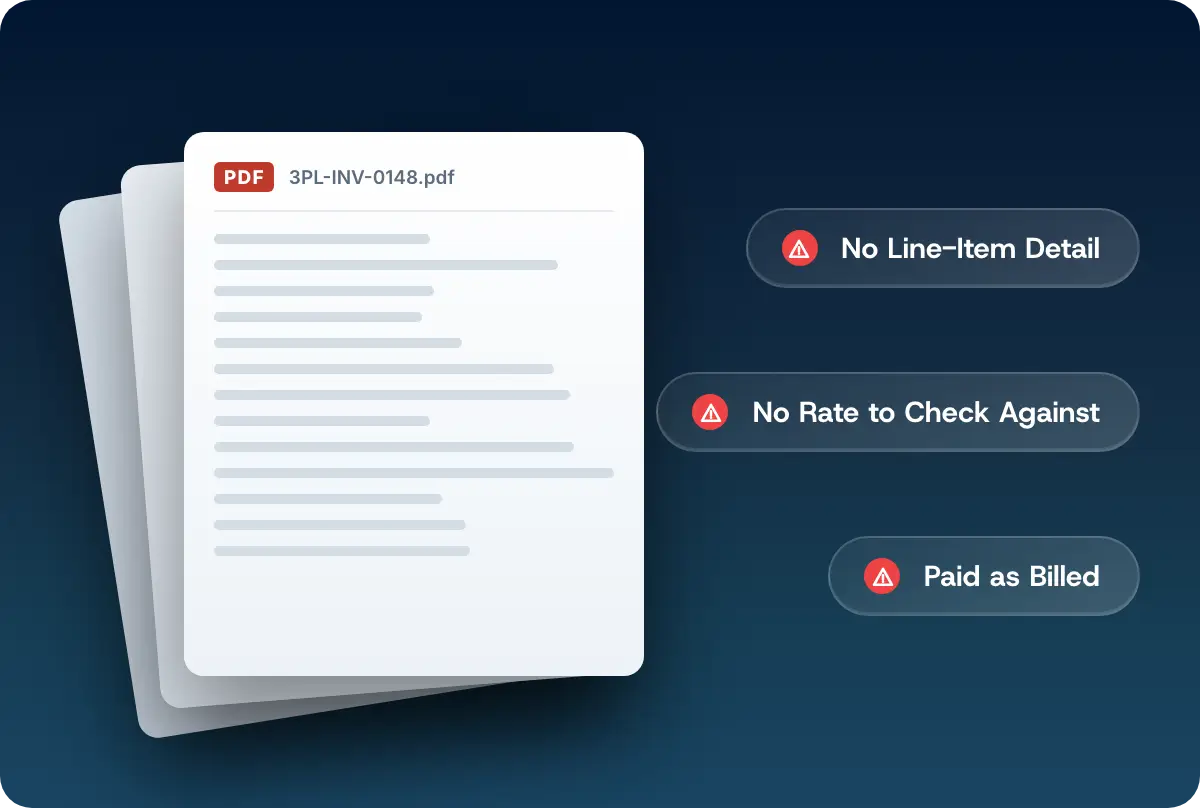
Agreement and rate details should have equal focus. A system may need to evaluate worked out rates, minimum charges, dimensional regulations, gas routines, zone interpretations, surcharge problems, currency needs, and efficient dates. Ask exactly how these terms are represented and kept, specifically when agreements vary by service provider, consumer, facility, lane, or service type. Clear support for versioned policies can help guarantee a billing is assessed versus the terms that used when the solution occurred.
Assess Information Quality and Matching Demands
Even capable audit software application relies on reputable source information. Evaluation groups need to examine duplicate records, missing monitoring numbers, irregular address formats, conflicting weights, unit distinctions, incomplete accessorial codes, and date or time-zone disparities. They need to likewise identify which areas are necessary for matching invoices to deliveries, orders, agreements, and proof-of-delivery information.
A solid examination includes representative examples rather than just tidy test files. Use ordinary shipments, exemptions, returns, global motions, multi-package orders, and billings consisting of debts or challenged charges. This reveals whether the system can recognize partnerships across records and explain why a fee was accepted, flagged, or denied.
Take Into Consideration Reporting, Controls, and Data Access
The worth of audited information expands beyond discovering private discrepancies. Businesses might require recaps by provider, center, consumer, solution degree, lane, delivery type, or billing duration. They may also wish to distinguish recoverable mistakes from legitimate charges and check recurring issues. Verify that the software program can give beneficial coverage while preserving the transaction-level information required for review.
Data accessibility and administration ought to become part of the analysis as well. Review user approvals, audit histories, export options, retention techniques, and the capacity to document choices or corrections. These capabilities sustain cooperation amongst logistics, money, procurement, and operations groups without losing the initial document or the thinking behind a modification.
Develop an Analysis List
Before selecting a system, develop a list that maps each required data source and field to a company purpose. Consist of operational occasions, invoices, price agreements, account structures, exception codes, and reporting requirements. Videotape the expected style, update regularity, accountable owner, and any type of makeover needed before the data can be utilized.
FreightOptics offers 3rd Party Logistics warehouse 3PL audit software Audit services, and its 3pl Audit Software can be considered along with the company's present systems, companion requirements, and audit processes. A concentrated review of information needs helps services choose software program that fits their functional atmosphere and sustains regular, explainable billing analysis.
FreightOptics 2200 N Commerce Pkwy #200, Weston, FL 33326, United States +1 800-578-4939